The Five Senses of a Beautiful Room
July 29 2026
I felt it was fitting to introduce you to the world of APENTE through our core design philosophy.
If you’ve read my invitation, Meet Me Upstairs, you’ll know that design for sensual living is one of the principles the studio is built on. It begins with a simple belief: we experience the world, and our homes, through all of our senses. To honor the fullness of our lives means creating interiors that satisfy us beyond what we simply see.
It’s easy to think of interior design as a visual art. I certainly did when I first began studying design. Everything centered on how things looked. And perhaps the way we consume interiors today, like through magazines and Pinterest, reinforces the perception that sight is our most important sense. Photographs are powerful tools in capturing what we see but they don’t capture what it means for our bodies to inhabit a space.
So then the question becomes: when you enter a room, how are you experiencing the design beyond sight?
Architecture and the Senses
I intended to name this section “The Eyes of The Skin” because I am obsessed with that title. But since it was already used in the invitation, I decided to settle with its subtitle instead.
In The Eyes of the Skin, Juhani Pallasmaa explores the relationship between our senses and the built environment. It’s a short but dense foundational text for anyone interested in reading it. He offered useful examples of how our senses are engaged, but rather than present these ideas as a lecture, I’ll invite you into the experience.
So let’s play a little imagination game.
I want you imagine one of your favorite restaurants or bars. Try to think of a place where you would take a romantic date or host a birthday dinner. Got it?
Let’s begin:
Sight
I would disclose the name of one of my favorite date night bars in NYC, but I’ve had a few first dates there and will probably have a few more, so I prefer to keep it in my arsenal (hint: it’s in FiDi).
(Just kidding, it’s the Galerie)
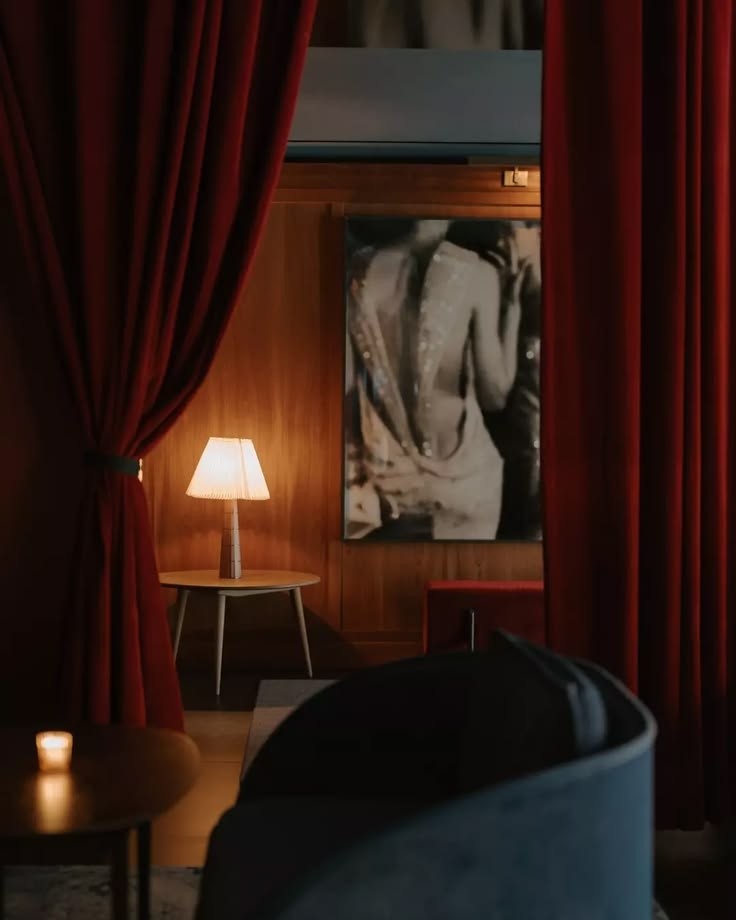
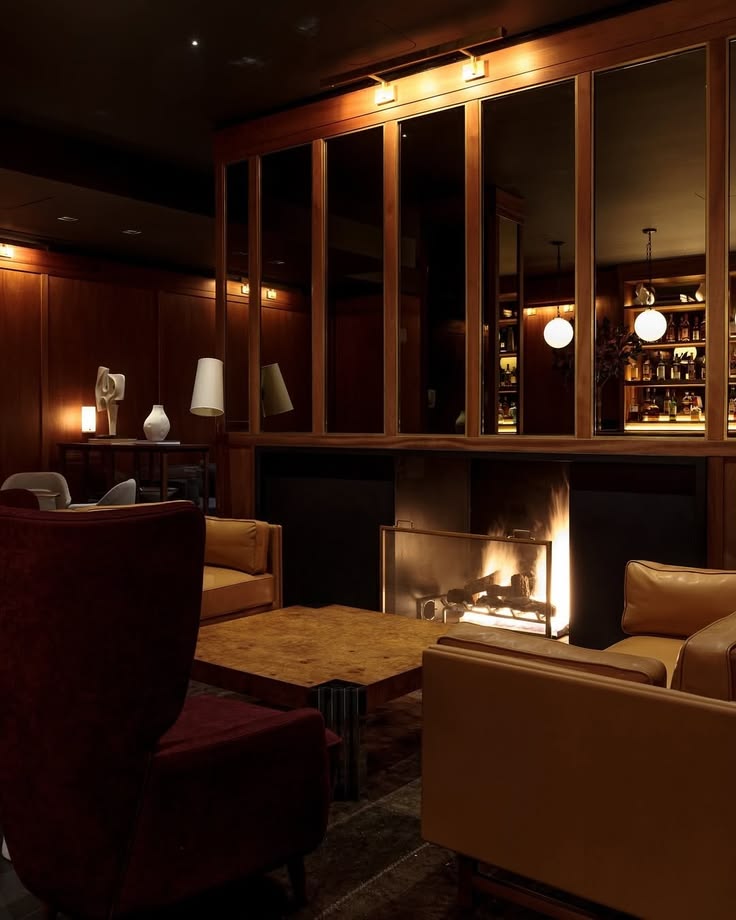
Pictures do it some justice, but I’ll walk you through the experience.
Upon entering, you’re greeted by pools of dimmed light that cast mysterious shadows dancing along the walls. Heavy, red drapes set the scene. Drapery is a functional tool that can be used to control light, sound, and create zones. But the drama that sweeping drapes create? They create anticipation. They’ll make your entrance feel theatrical, which is key for making a memorable first impression.
You’ll also notice the colors being used: deep red, slate blue, camel, and cognac-colored woods. It’s completely up my alley but outside of personal taste, lets think about how the colors are being used. Think about how these colors make you feel.
Now we’re dipping our toes into color psychology and color theory, which I’ll dive into more deeply later. But for now, let’s focus on the role color plays in setting the mood. In a room designed for intimacy, rich reds can feel like deep passion, muted blues can feel relaxing, and fireside warmth of camel and cognac is a sultry neutral. Together, these colors create a mood that feels sophisticated and a bit seductive.
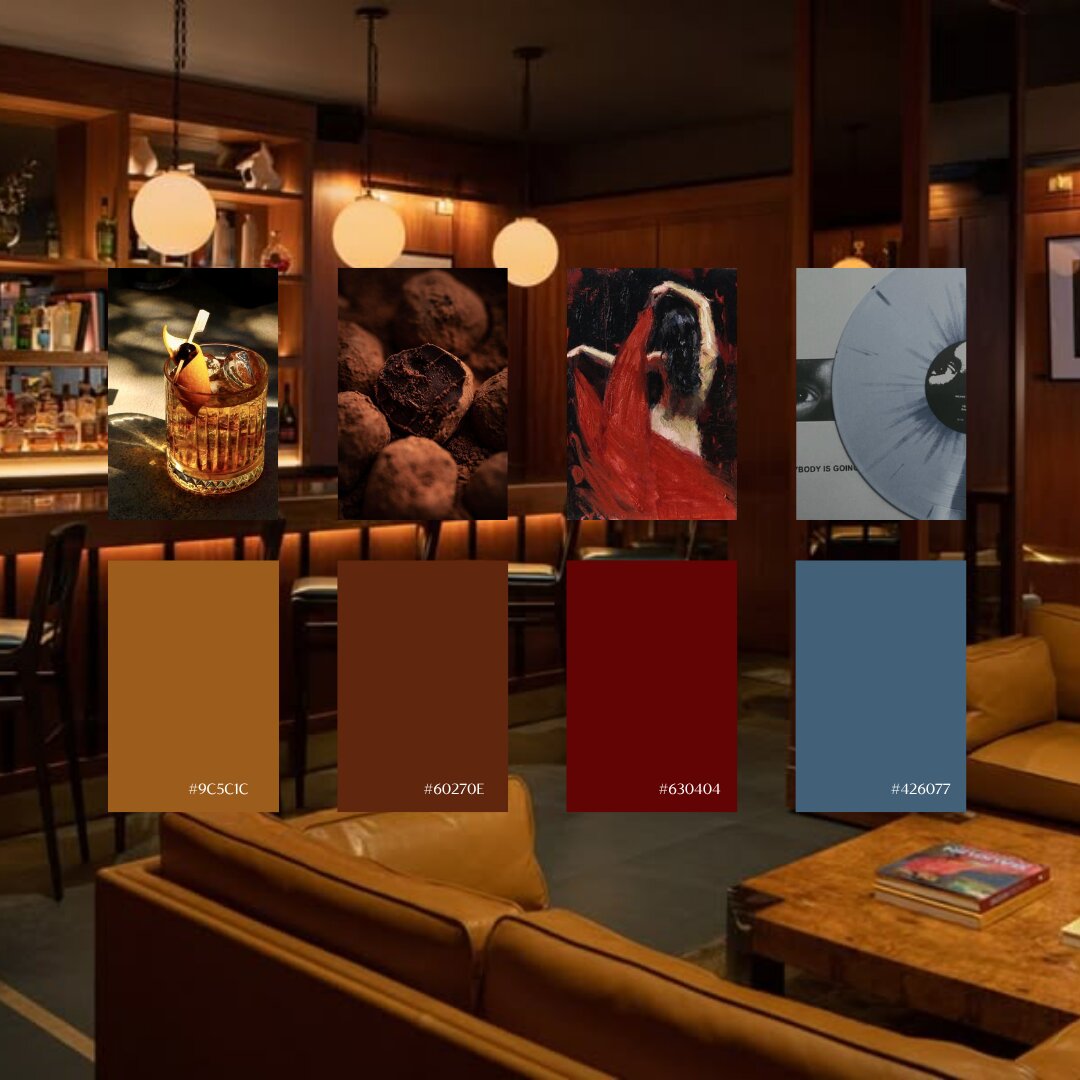
But perhaps what I love most is how the furniture is arranged. The design encourages guests to settle beside the mirrored fireplace or maybe tuck away at a small two-seater. There are pockets throughout with seating so low to the ground that you can literally sink into whoever you’re with.
Nothing feels accidental, or as our dear friend Solange would say: “do nothing without intention.”
Touch
I could go on for pages about all there is to see, but I wanted to leave room for one of my top love languages: touch. Sight may be the first sense to greet us when we enter a room, but touch is where we begin to understand it with our bodies.
Touch tells us things our eyes can’t see and the most beautiful rooms consider how our bodies respond to the material world. Think back to the place you selected for our game and imagine the surfaces you wanted to touch.
In my case, it started (once again) with the velvety drapes and the supple leather chairs paired with hard stone coffee tables.

Notice how I used the words “supple” and “hard” together.
Our skin is able to read texture, weight, density, and temperature; and just like our eyes, our perception becomes more pronounced through contrast. You may know what it feels like to step out of a cold pool and placing your wet feet onto warm, dry stones. The sensation is reminiscent of a spa, but that feeling has little to do with what we see. It’s the contrast between cold and warm, wet and dry, soft and hard – an experience understood through touch.
Speaking of reminiscing, Pallasma writes about our tactile experience with aged objects. Using examples like an old door handle or a pebble polished by the sea, he describes the pleasure of knowing that thousands of hands have touched these objects before us. And I love this idea; that the things we touch can connect us to people we’ve never met and places we’ve never known.
Touch has the power to connect us to material, to memory, and to time.
Scent
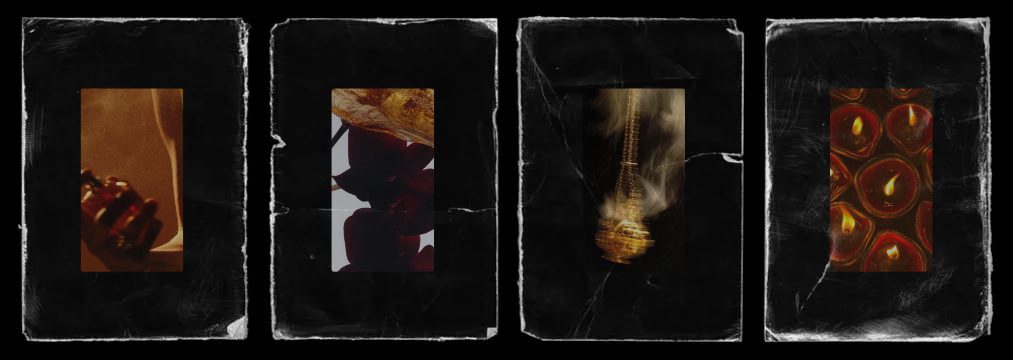
To continue our conversation about the relationship between our senses and memory, few are as closely connected as scent. Scent is powerful beyond aromatherapy.
It’s an interesting sense because we process it differently than the others. Scent bypasses the brain’s filtering system and travels straight to the memory and emotion centers, triggering us before we get a chance to name what we’re smelling.
This is why a note of something, like a particular perfume or fresh rain, can return you to a room you haven’t stood in for years, faster than a photograph could.
The Eyes of the Skin mentions how a place has scent memory, or for example, the way a house holds the smell of its inhabitants, its meals, its years, long after the people themselves have moved on. This is partly why old buildings feel more emotionally resonant than newer ones. They’ve aged in scent along with appearance. I think of my Nana’s home this way. It looks fuzzy in memory, but I always remember how it smells.
Think about the place you chose for our game. What does it smell like? Is there a particular scent that makes you remember a time you had there?
For me, it’s the smell of the walnut wall panels, the leather, the wafts from the kitchen, and in some occasions, the cologne of my date. Each is pulling its weight in creating the ambiance, and sometimes it isn’t about the place at all. It’s about who you’re with – that being the one you’ll remember longest.
Sound
Sound can be an overlooked element of a room. We notice when a room looks beautiful, or how it smells, but we don’t always stop to consider how it sounds.
Pallasmaa makes a distinction between sight and sound that I think about often: we regard an object with our eyes but sound approaches us. A room doesn’t look back at you. But it does listen when we walk through it. Buildings don’t react to our gaze. But they do return our sounds when we speak.
So, sound has the ability to shape the way we move through a space. A room with hard surfaces and high ceilings can feel hollow, while a room layered with textiles can feel more intimate. It’s the difference between a carpeted floor and a poured concrete dance floor that allows the sound of heels to echo with the beat.
Then there is the beat itself, which can transform our perception of a space entirely. The same room can feel sensual under spiritual jazz and charged under soca. Sound gives a room rhythm.
Let’s return to the place you chose for our exercise. What sound stands out there? Was it the low hum of conversation around you? The clinking of glasses? Or maybe a playlist that matches the mood. We may not consciously notice the acoustics of a room, but we definitely feel them.
So consider what you hear when you enter a room, from beneath your feet and all around you. Those sound waves are creating an atmosphere and the most sensual spaces encourage us to listen.
Taste
Taste might be the least obvious sense to translate into interiors. After all, we don’t taste our walls or furniture. But, I find it interesting that we use the language of taste all the time to describe spaces and objects. Have you ever called a room “bland” or a material “delicious?”
Our senses don’t exist in isolation. Our visual and tactile experiences can sometimes take on an oral quality, as if what we see and touch could be experienced by the tongue.
When I visit Galerie, the deep reds noticed through sight begin to feel richer. The cognac-colored wood looks caramelized and polished chrome looks smooth to the tongue. Suddenly, the room almost feels edible. A beautiful room can create an appetite for experience.
Food for thought: taste has less to do with what we consume and more to do with what we desire.
Keep Looking Up
— J.